

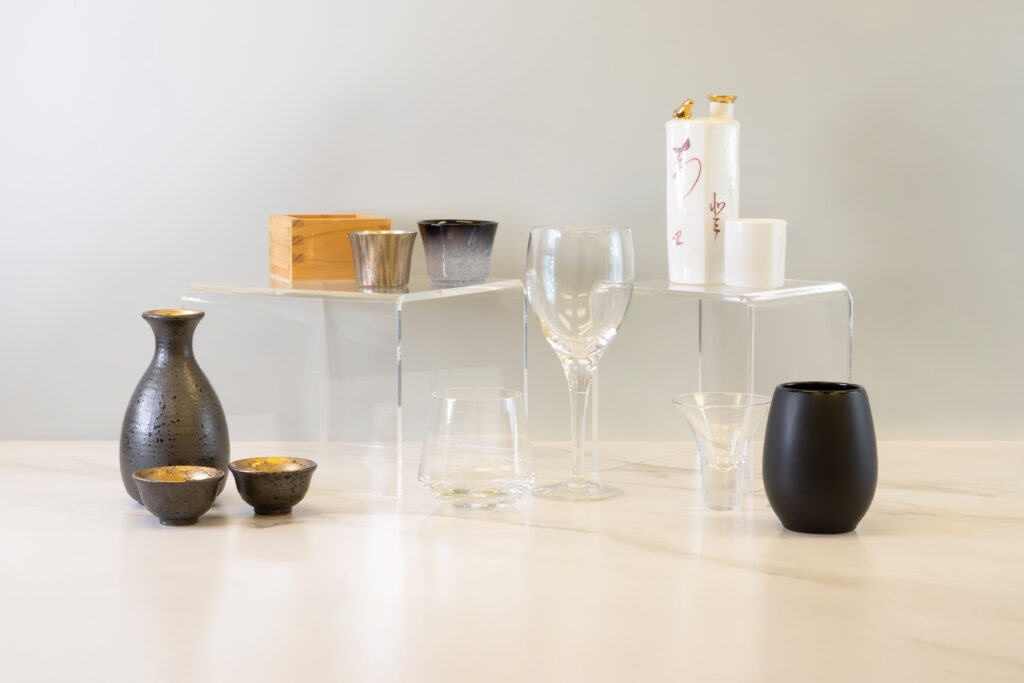
One of the most common questions we get is “what kind of glass should I use for saké?” The easy answer is: You can drink saké from virtually any kind of glass or cup you can think of. Fond of that “#1 Dad (or Mom)” coffee mug? Well, that can be your sake cup of choice if it makes you happy. But different circumstances and preferences can influence this decision greatly, and showing up at your local Izakaya with your cherished mug might get you a couple of unwanted stares, so let’s take a deeper dive.
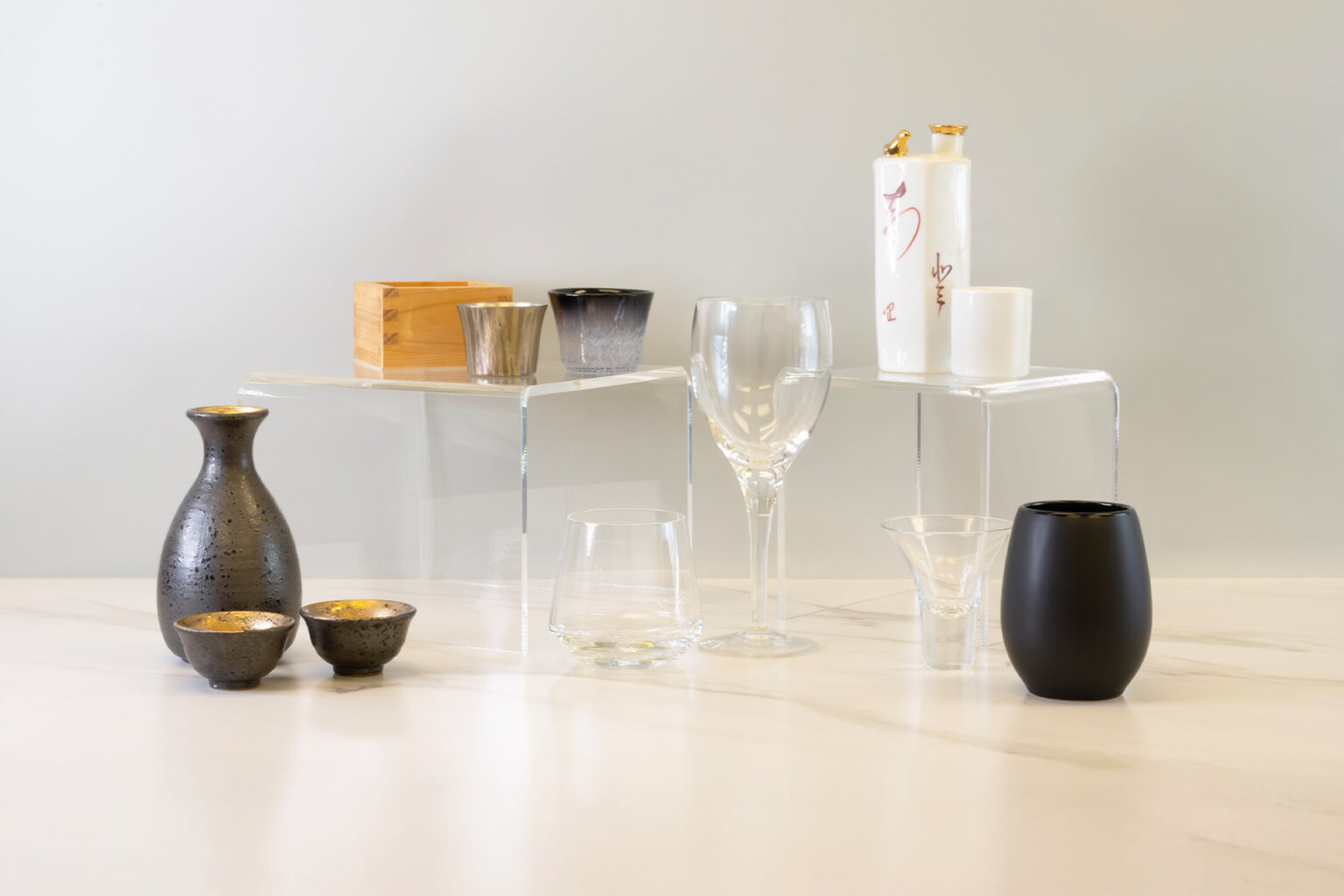
In Japan, saké has traditionally been served in smaller vessels relative to the larger glassware most American’s associate with drinking beer or wine. The workhorse you’ll see in many situations is the ochoko – pronounced o-CHO-ko. It is often paired with a small carafe call a Tokkuri (toe-KURR-ee). An ochoko holds one to two ounces of saké and is made for sipping and savoring saké. However, be careful not to let the small size of the vessel fool you into over-indulging! They are typically ceramic or glass, but can also be made from metal or wood. Think “short shot glass”, but made for sipping, not shooting. Also, because it is traditional to fill your friends’ ochoko, and have them fill yours, a lower volume means more cup filling, which makes the occasion a more social, mindful event. It also allows you to monitor each other’s consumption – maybe not the worst idea.
A slightly larger option is the guinomi (gwee-NO-mee). These are larger than an ochoko and are typically ceramic. They hold between two and six ounces of saké, closer to the volume of a modest white wine glass. Together with ochoko, guinomi are the cups people most think of when they think of traditional Japanese sake cups. Both are excellent choices for the enjoyment of saké.
If these traditional Japanese accessories don’t feel right to you, the even more esoteric options like square masu cups, flat sakazuki bowls, ornate kiriko glasses or the choice of professional saké tasters, the kikichoko, may not seem right to you. But we still recommend trying them – you never know which option might grab you.
More familiar options like a stemless wine glass, or a stemmed white wine glass, may feel more natural to you and are 100% acceptable. For many, this glass often used for the enjoyment of white wine, will help them better understand the way saké should be served and enjoyed – as an elegant beverage meant to be sipped rather than shot, and one that is typically best served chilled.
When it comes to drinking wine, there are those who will swear that each grape variety should be served in a different shape of wine glass. We won’t wade into that discussion except to say that with saké, you don’t need to think this hard. An all-purpose wine glass is great. If you have a favorite shape, go for it. Saké doesn’t oxidize or aerate quickly like wine, so performing geometry to determine the optimal surface-area-to-volume ratio of your glass isn’t necessary. This slower oxidation rate also means an open bottle of saké will last several weeks in your fridge swimmingly. When wine drinkers ask us how to serve saké, we often say “serve it like a white wine – chilled, in a similar glass, sip it and savor it.” Saké comes in different styles – ginjo, honjozo, nigori, sparkling, and more…we don’t want to live in a world where someone tells us we need a different vessel for all of these styles.
Practicality also plays a role. There’s a good chance that you don’t want several different types of glassware cluttering your limited cupboard space. A lowball or rocks glass works great for saké. Additionally, if the ABV% of the saké you are enjoying seems a little high to you, enjoy it on the rocks. This method has the dual benefit of keeping your saké chilled (the preferred way to serve most saké) and moderates your alcohol intake. Cask strength, aka genshu (GHEN-shu) saké, has not been diluted after brewing, so the ABV% tends to be a bit higher than typical saké. It is important to note that water is added to most saké prior to bottling – not to cut costs, but to achieve a specific style. To whiskey drinkers, we often say, “drink saké like you drink whiskey – sip it, savor it, and if you want to cut it with a little ice, go for it!”
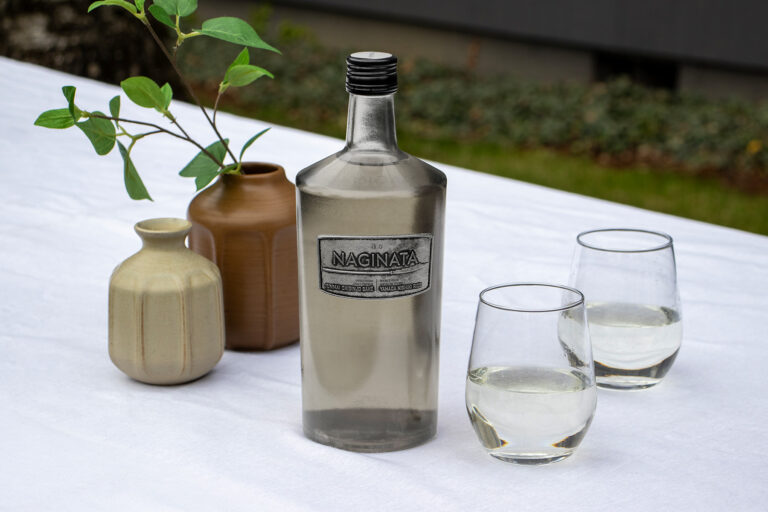
At SakéOne, we use small, stemless wineglasses in our tasting room. We are located in Oregon wine country, so our visitors tend to be very comfortable with this shape. The glass also allows you to clearly see the saké you are drinking. Thinking a little outside of the box, one of our favorite options is a cup we had created for our G Saké brand. It’s a combination of stemless wine glass and ochoko – a generous ceramic vessel in the familiar wine glass shape. The added thickness of the cup holds its temperature well and is appropriate for both chilled and warmed saké.
The important thing to remember about choosing the right glass or cup for saké is this – do what feels right. Saké is a beverage meant to be sipped and savored, a social beverage to be enjoyed with family and friends, and one that collaborates with practically any kind of food you can think of. So, if you want to enjoy saké AND let everyone know that you’re the World’s Greatest Mom or Dad, we’re good with that!